Swelling, pilates, and Black Maternal Health Week
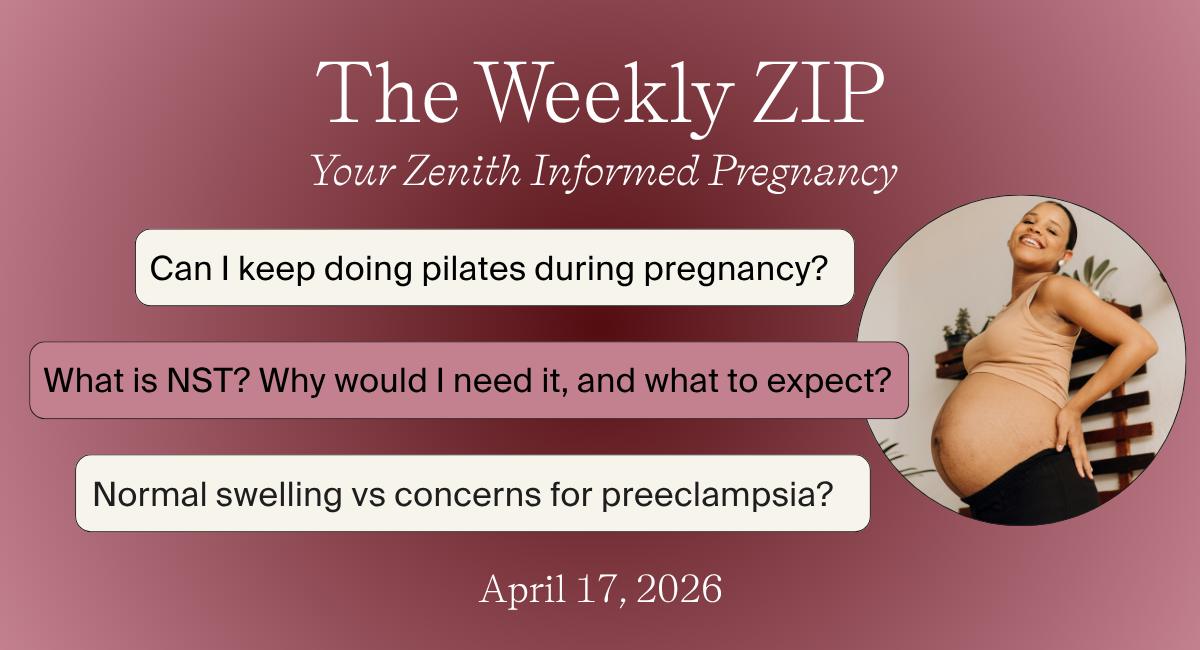
Welcome to the weekly ZIP - your Zenith Informed Pregnancy!
Read on for a quick zip through 3 of the week’s most popular pregnancy questions, and the evidence behind them. Plus - bonus content on the latest & greatest in the world of pregnancy research.
This week's top pregnancy questions:
1️⃣ What is NST? Why would I need it, and what should I expect?
2️⃣ Can I do pilates during pregnancy?
3️⃣ How can I tell the difference between normal pregnancy swelling or being worried about preeclampsia?
What is NST? Why would I need it, and what should I expect?
Anything including the word “stress” can sound concerning, but an NST, or “nonstress test” is one of the most common monitoring tests in the third trimester. Knowing why it's done (and what "reactive" vs. "non-reactive" actually means) makes the whole experience a lot less… well, stressful… than the name might suggest.
📚The tl;dr from the evidence: A nonstress test, or NST, is a common noninvasive test that measures fetal heart rate in response to the baby's own movements, using monitors placed on your belly. The goal is to check your baby’s health by seeing if their heart rate increases normally with movement - without doing anything to “stress” the baby (hence the name). It’s most often done starting in the third trimester in pregnancies where there may be concerns that you’re feeling the baby move less than usual, or when higher-risk complications are present, like high blood pressure, diabetes, fetal growth restriction, or going past your due date.
Depending on your situation and why NST monitoring is being recommended, it’s normal to have it done anywhere from occasionally, weekly, or even twice a week. It can take anywhere from ~20-40 minutes, as babies have sleep cycles and it may take time for the baby to move. Results come back as either "reactive" (which is reassuring: the baby's heart rate increased at least twice during the window) or "non-reactive."
A non-reactive result doesn't automatically mean something is wrong – the baby may simply have been asleep, and certain medications can also affect responsiveness, but it does usually mean your provider will order additional tests for a better picture of what’s going on.
👀 Read Penny’s full summary of the evidence for more on NST
Can I do pilates during pregnancy?
Low impact, higher intensity workouts like pilates are surging in popularity – whether reformer, mat, or even heated versions of the practice. Many women who are avid pilates fans are faced with a choice – can I keep doing this now that I’m pregnant? Here’s what we know from the data about what’s safe and when to start modifying.
📚The tl;dr from the evidence: Pilates is generally considered safe and even beneficial - with benefits like improved mood, sleep quality, and less pregnancy-related back and pelvic pain. ACOG endorses aerobic and strength-conditioning exercise for uncomplicated pregnancies, and pilates fits squarely in that category. Both reformer and mat pilates can be pregnancy-safe options, so long as you’re able to modify appropriately/as-needed as your balance and comfort changes throughout pregnancy, and especially when working with an instructor with prenatal experience/training. However, hot/heated pilates is generally recommended to skip during pregnancy - due to the potential negative effects of heat stress.
Some practical tips to get the most out of it: consider looking for prenatal pilates classes, or find an instructor who has experience with pregnancy, so that the movements and positions can be modified appropriately as your body and balance change throughout pregnancy. It’s also worth some caution towards overstretching – pregnancy hormones like relaxin loosen your joints more than normal, which can increase injury risk if you push too hard.
If you have pregnancy complications or other medical complications, it’s always worth getting input from your provider before starting a new exercise class or regimen.
👀 Read Penny’s full summary of the evidence for more on pilates
How can I tell the difference between normal pregnancy swelling or being worried about preeclampsia?
“Is this much swelling normal? *insert ankle photo*” is posted at least daily on the pregnancy community forums, and it’s completely understandable – swelling is one of those symptoms that’s “completely normal and fine!” until suddenly it’s “go to the emergency room NOW.” Wanting reassurance on what’s normal vs what’s cause for concern is healthy - so as much as it’s easy to joke about as ‘just another crazy symptom,’ here’s what to know about when to escalate.
📚The tl;dr from the evidence: Most pregnant women experience some degree of swelling, particularly in the legs, ankles, and feet, and as pregnancy progresses. “Normal” swelling This is driven by the body's increased blood volume, fluid retention, and the growing uterus putting pressure on blood vessels: normal, expected, and not dangerous on its own.
Preeclampsia is a pregnancy complication that’s a blood pressure condition, typically with onset after 20 weeks. Swelling that might indicate more concern for preeclampsia is if it happens very suddenly or is clearly increasing quickly, or is present in the face or hands (like a ring suddenly not fitting). While swelling can happen in preeclampsia and can be a warning sign, on its own, it isn’t a reliable way to diagnose or flag the condition – for preeclampsia to be suspected, it's key to look for other “red flag” symptoms or swelling patterns that might be happening in parallel.
Red flag symptoms to look out for in conjunction with swelling are severe/persistent headaches, high blood pressure, any changes to your vision (seeing spots or blurred vision), sudden shortness of breath or issues breathing, and/or serious upper abdomen pain.
The way it’s formally diagnosed is via blood pressure checks and urine tests (checking for protein in the urine), as some people have no obvious symptoms initially - so if you’re worried based on your swelling patterns or any combination of symptoms, it’s always worth checking in with your doctor so they can check in on you and advise you on whether additional testing or urgent care is a good idea.
👀 Read Penny’s full summary of the evidence for more on swelling and what’s more serious
🤓 Zenith's top read of the week
Bonus: what the Zenith team found interesting this week. Think cool pregnancy research or recently published studies, news in pregnancy health and policy, and more!
The Evidence Behind Care Rooted in Justice and Joy - Black Maternal Health Week 2026 (Zenith Health) - Today (April 17) is the final day of Black Maternal Health Week 2026: this year’s theme is Rooted in Justice & Joy. Part of BMHW, of course, is about awareness – Black women in the US face disproportionately higher rates of maternal mortality and morbidity, and the evidence for why isn't a mystery: systemic barriers in access to care, research that has historically underrepresented Black women, and the documented role of chronic stress and bias in clinical settings.
BMHW is centered on not just awareness of the challenges - but about elevating what care actually looks like when it centers joy, agency, and whole-person care. We wrote this piece to amplify the evidence-backed care principles and practices that improve both experiences AND outcomes. Whether you’re a mom, a care provider, or a healthcare leader – the blog shares ways you can get involved not only this week in celebration of BMHW, and how you can help move the needle in the weeks, months and years to come.
Key excerpt:
“Black women are 3-4 times more likely than white women to die from pregnancy-related causes, despite 80% of those deaths being preventable – but you’ve probably already heard the alarming and disheartening statistics. The conversation around Black maternal health is often centered on disparities and risk, rather than the systemic failures behind them or the approaches that are already established to help resolve them. This year’s Black Maternal Health Week (BMHW) theme, Rooted in Justice & Joy, invites a shift: away from framing Black women as a “problem to be solved” and towards solutions that already exist within communities.