Milk supply, listeria, and maternal mental health
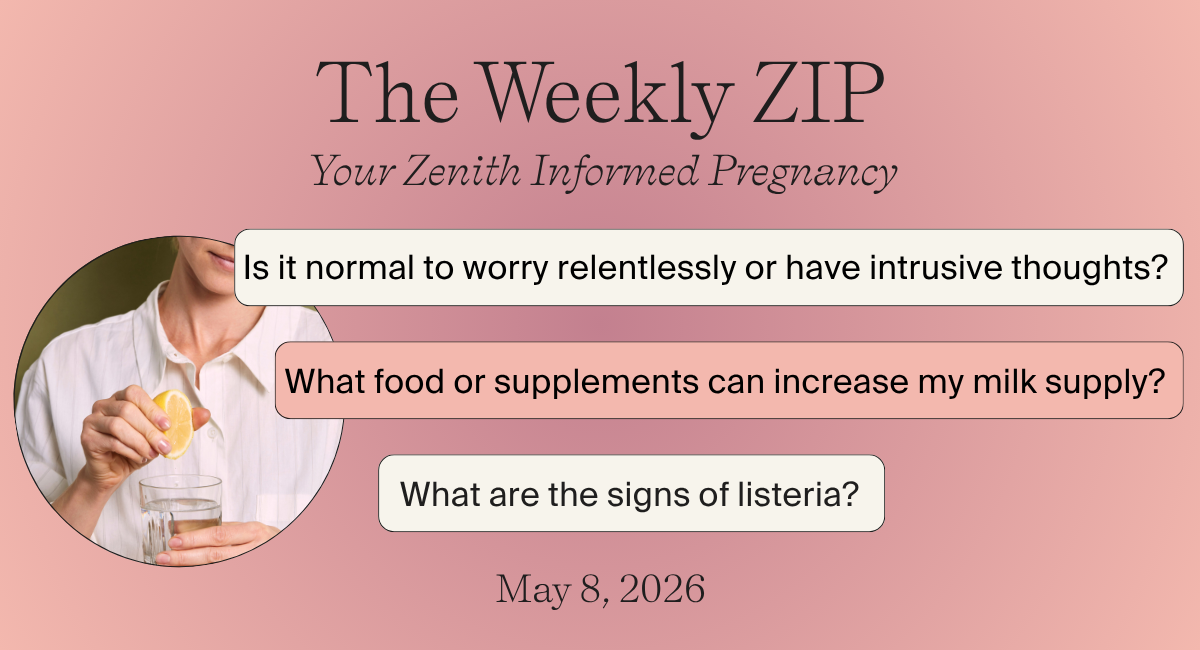
Welcome to the weekly ZIP - your Zenith Informed Pregnancy!
Read on for a quick zip through 3 of the week’s most popular pregnancy questions, and the evidence behind them. Plus - bonus content on the latest & greatest in the world of pregnancy research.
💐💝 And before we get into it - we're wishing a very happy Mother's Day to all of the moms out there.
If you're looking for a way to honor motherhood beyond just flowers or brunch (and yes – still send the flowers!), consider joining the Pregnancy Evidence Project to make a lasting impact and truly support other moms. Sharing real pregnancy experiences helps to answer the thousands of questions that currently lack research and data, and ultimately bring peace of mind and empowered decision making to future moms. 💝💐
This week's top pregnancy questions:
1️⃣ Is it normal to worry relentlessly or have intrusive thoughts during pregnancy or after my baby is born?
2️⃣ What foods, supplements or nutrients are proven to help increase milk supply while breastfeeding?
3️⃣ What are the signs of listeria, and how worried do I actually need to be about it during pregnancy?
Is it normal to worry relentlessly or have intrusive thoughts during pregnancy or after my baby is born?
Wednesday was World Maternal Mental Health Day, a good reminder on the importance of mental health to the safety and wellbeing of moms. There's a cultural script that says anxiety during pregnancy just “comes with the territory,” but where is the line between what’s common (knowing that ~1 in 5 women experience a mental health condition during pregnancy or postpartum) and what’s actually normal?
📚The tl;dr from the evidence: Perinatal anxiety disorders are clinically distinct from the common and normal experience of occasional worries about whether you’re going to be a good parent, or concerns about something going wrong. Intrusive thoughts and worries can be very common in pregnancy and after birth. The distinction between what's normal and what signals something more serious generally comes down to intensity, frequency, and functional impact: are these thoughts controllable, or are they taking over? Are they interfering with sleep, daily functioning, or your ability to care for yourself or your baby?
Just because something is common doesn’t mean it’s normal or is something you’re “stuck” with - there are effective, evidence-based treatment options for perinatal anxiety disorders, including therapy and, when appropriate, medication. Experiencing intrusive thoughts or relentless worrying doesn't make you a bad or dangerous parent, but they are a signal worth paying attention to and working with your provider on a path for support and treatment. Providers with training in reproductive psychiatry are especially equipped to navigate treatment decisions during and after pregnancy.
👀 Read Penny’s full summary of the evidence for more on perinatal anxiety
And P.S. - If you missed it, check out the latest installment in the Zenith blog, guest authored by perinatal psychotherapist Olivia Bergeron, LCSW, PMH-C: What No One Tells You About Postpartum Anxiety, covering the many different ways anxiety can actually show up, and what helps.
What foods, supplements or nutrients are proven to help increase milk supply while breastfeeding?
So many moms feel immense pressure around breastfeeding in the early days postpartum, and low milk supply is one of the most stressful experiences. It's a category flooded with products, teas, supplements and influencers making big promises – so what does the data actually support?
📚The tl;dr from the evidence: The evidence behind most specific / individual “remedies” for low milk supply is weak - the biggest factors with supportive evidence are overall caloric intake and nutritional needs being met, and frequent/effective milk removal (via nursing or pumping). Research has demonstrated that inadequate nutrition and restrictive dieting can reduce milk volume, which is unfortunately common in the postpartum period when some women are trying to lose weight after pregnancy weight gain. It’s super important to avoid overly restrictive dieting during the postpartum period, and ensure that you’re taking in enough calories and nutrients for your body to produce milk, replenish and recover after pregnancy and childbirth.
Milk supply is hard to “boost” with any single food or supplement, so it’s worth starting skeptical of any single “miracle supplement” or ingredient promising increased supply. A few herbal/food-based products have shown some benefit in studies, although the evidence is generally not strong or conclusive. Moringa leaf is one ingredient that does have research indicating a possible impact on milk volume and prolactin (a hormone that helps milk production). Other commonly used things like fenugreek or brewer’s yeast do have some research, but the evidence is pretty mixed – some trials have shown small, short-term increases in milk supply early on, while others have shown no meaningful difference later on or versus placebo.
If you’re experiencing challenges or concerns with breastfeeding, there are certified lactation consultants (look for someone who is a designated IBCLC -an International Board Certified Lactation Consultant) who can help you – and there are often options covered by your insurance. You’re not alone in the feeding journey, and working with an IBCLC and/or a dietitian can be an amazing option to help ensure you’re getting everything you need to be healthy and successful while breastfeeding your baby.
👀 Read Penny’s full summary of the evidence for more on breastfeeding & nutrition
What are the signs of listeria, and how worried do I actually need to be about it during pregnancy?
The pregnancy “food rules” list can feel endless and random: from deli meat, soft cheeses, to sushi and even sprouts. Listeria is the reason behind a lot of those warnings, but the actual risk profile is worth understanding – because "it's on the list" and "here's what the data actually says" are two different things. “Do I have listeria?!” is one of the most pregnancy-Googled things, but what does it actually look like, and how likely is it that eating a food from the “list” is going to result in listeria?
📚The tl;dr from the evidence: Listeriosis (infection from Listeria) is uncommon, but it is true that pregnancy makes it more likely than in other healthy adults (and importantly, it can be dangerous for the baby). When listeriosis is symptomatic during pregnancy, it can look like a general “flu-like” or stomach illness – symptoms like fever, chills, aches, fatigue, and/or nausea, vomiting or diarrhea. Symptoms can appear anywhere from a few days to several weeks after exposure, which can make it tricky to track.
It’s important to remember that absolute risk is very low: even after a potential exposure, it’s rare to actually get listeriosis. A lot of moms panic after eating something they thought was “safe” and later learning that there may be listeria risk, but the best thing to do is to know the symptoms that would be a sign of possible infection, and when to escalate to your provider for treatment. If you are worried about a potential exposure, monitor for symptoms in the days following your exposure, and reach out to your doctor if you’re experiencing a fever (especially if accompanied by flu-like or GI symptoms) without an alternative potential explanation. Also know that even in the rare chance you do have it, listeriosis is treatable with antibiotics, and early treatment improves outcomes.
👀 Read Penny’s full summary of the evidence for more on listeria
🤓 Zenith's top read of the week
Bonus: what the Zenith team found interesting this week. Think cool pregnancy research or recently published studies, news in pregnancy health and policy, and more!
Targeted removal of soluble Fms-like tyrosine kinase 1 in very preterm preeclampsia: a pilot trial (Ravi Thadhani, et al., Nature) - This is a super exciting new finding on a potential treatment for early preeclampsia from a pilot trial, published last week in Nature - researchers tested an approach to filter out a protein in the blood that the placenta overproduces in preeclampsia, in a process similar to dialysis. Their findings were very promising: blood pressure came down after each session, and pregnancy continued for a median of 10 additional days after admission.
The sample size is very small, and more trials and testing are needed before something like this could be approved and broadly available to women with preeclampsia, but it’s a very exciting development to finally see trials on a potential preeclampsia treatment. To date, despite how serious of a complication it is, the best ‘treatment’ we have is essentially managing symptoms for as long as possible, and ultimately just delivering the baby. The potential to actually treat the root cause of the condition could make a huge difference in outcomes and the standard of care for moms and babies, if strong results continue along with further testing!
Key excerpt:
“Soluble Fms-like tyrosine kinase 1 (sFlt-1), a protein secreted by the placenta, plays a central role in the pathogenesis of preeclampsia—a life-threatening pregnancy complication for which no disease-specific treatment currently exists. … Selective removal of sFlt-1 by apheresis appeared to be safe and well tolerated in women with very preterm preeclampsia. Controlled trials are needed to confirm the additional safety and efficacy of this approach.”