Flowers are great, but the gift of real evidence is even better.
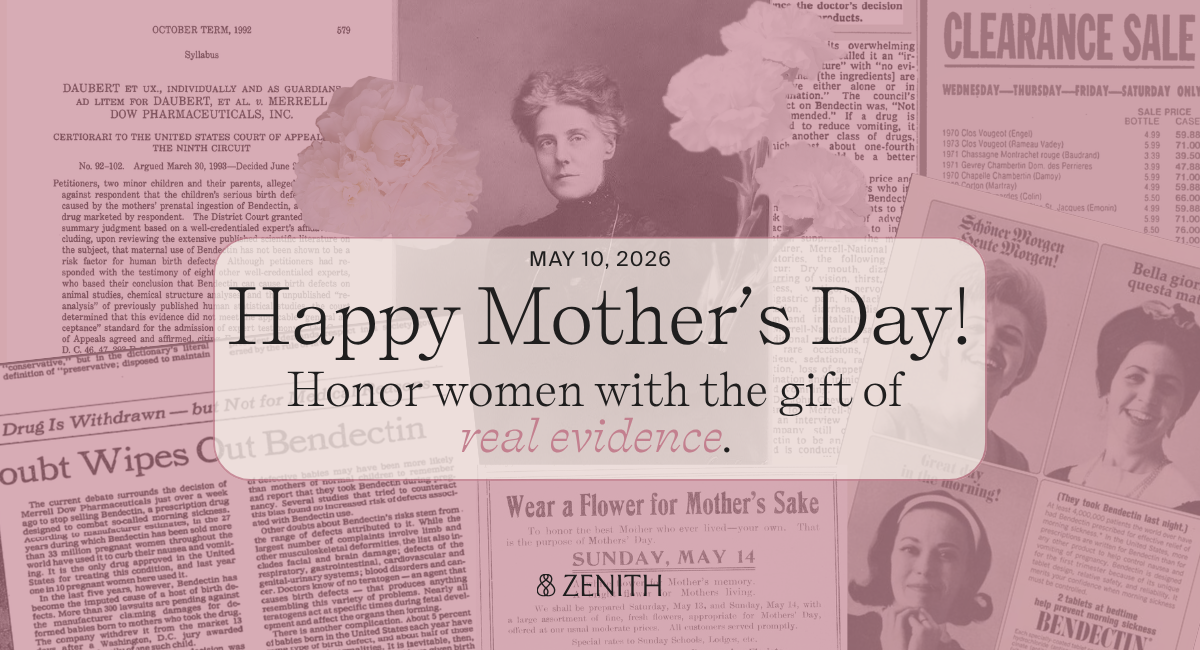
Happy Mother's Day to the incredible moms within the Zenith community.
This Mother’s Day, Americans will spend an estimated $30 billion – sending flowers, making brunch reservations, buying jewelry, gifts, and greeting cards. The holiday’s founder would be horrified at what it’s become.
Anna Jarvis wanted more than flowers
Anna Jarvis organized the first Mother’s Day in 1908 to honor her own late mother, Ann Jarvis, a social activist who dedicated her life to community health, healing, and unification – caring for soldiers during the Civil War, working to promote peace between families, and improving health and sanitation to reduce infant mortality (she gave birth to 13 children, only 4 of whom survived to adulthood). Anna sent 500 white carnations, her mother’s favorite flower, to a church service to be distributed to the mothers in attendance.
Within years, florists, confectioners, and greeting card companies had turned Anna's intimate gesture into a commercial event. Anna was furious – she spent the rest of her life and inheritance on lawsuits trying to take it back, calling the companies profiting from her idea "charlatans, bandits, pirates, racketeers." Mother's Day still isn’t the heartfelt holiday Anna intended – one that honors "the woman who has done more for you than anyone in the world" and the unrecognized labor, health risks, and sacrifices mothers take on for their children and communities.
While some things have changed dramatically for the better in the last century (thankfully, including a steep decline in infant mortality since Ann Jarvis’ time), we’re still not giving women’s health the attention it needs.
The result is a cycle that's hard to break: without evidence, uncertainty grows; uncertainty fuels fear; and fear – rather than safety – ends up driving decisions.
When fear outpaces evidence
This is exactly what happened in 1983 when Bendectin was pulled from the market. The medication was introduced in 1956 to treat nausea and vomiting in pregnancy, and was the most widely used treatment – prescribed to over 30 million women – until safety concerns arose in the late 1970s. Early studies and lawsuits linked Bendectin to birth defects, despite limited and conflicting evidence about its safety. In the wake of the thalidomide tragedy, media coverage amplified fears, and public trust unraveled.
Eventually, stronger evidence emerged confirming no link to birth defects – and some of the previous research was found to be flawed – or even fraudulent in some cases. But by then, the narrative and lawsuits had escalated and the cost of defending the drug became unsustainable. The manufacturer pulled Bendectin from the market due to legal risk, not safety.
It wasn’t until 2013, after decades of research demonstrating safety, that the same formulation was brought back to the market under a new name: Diclegis. But for 30 years, millions of women suffered needlessly.
History helps explain how we got here. It also reminds us that celebrating mothers is not the same thing as supporting them, and that progress in women’s health has always required a willingness to take women’s experiences seriously: their experiences studied, their questions answered, their risks understood.
The gift that lasts
Flowers and brunch are a lovely way to celebrate mothers, and we're hopeful that all of the moms in the Zenith community experience small gestures like this to feel loved and appreciated on Mother's Day. But neither lasts very long. The most meaningful thing we can give is a future where pregnancy isn’t a guessing game – where women can make decisions with confidence, not fear.
That's why we created the Pregnancy Evidence Project. Every experience shared becomes data that changes what "we don't know" looks like for the next woman who asks.
Join us, and share it with an expecting mom in your life. Because flowers wilt, but evidence lasts.